Most organisations are already dealing with Shadow AI, whether they realise it or not.
Employees are using ChatGPT, Claude, Gemini, AI-powered browser extensions, meeting assistants, coding tools, and countless other generative AI services to work faster.
The challenge is not stopping people from using AI.
The challenge is governing where organisational data goes.
In my previous article, Shadow AI Governance: Why You Must Control AI Data Risk In Microsoft 365 I explained why Shadow AI has become one of the fastest-growing data security challenges facing IT and security teams.
This article focuses on the next question:
How do you actually govern it?
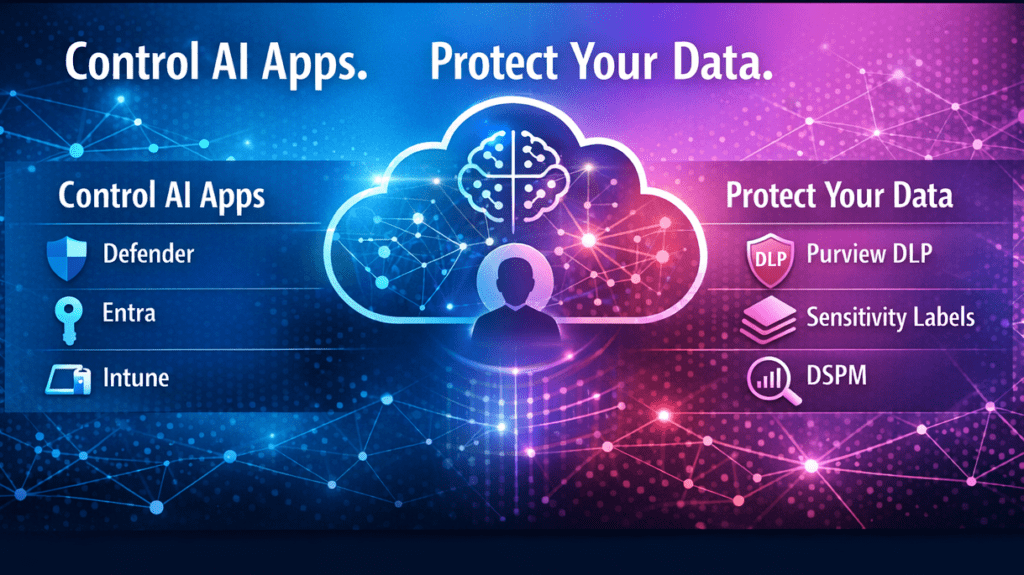
Microsoft recently published a deployment model called Prevent Data Leak To Shadow AI, which combines Microsoft Purview, Microsoft Defender for Cloud Apps, Microsoft Entra, and Microsoft Intune into a unified approach for managing AI risk.
Microsoft’s guidance is excellent.
But in practice, I simplify it into two control layers:
- Control the Apps
- Control the Data
Everything else supports these two decisions.
Because successful AI governance is not about blocking AI.
It is about enabling AI safely.
You cannot stop users using AI.
But you can control what happens to your data.
Read More
